.gif)

Do you know what Obsessive-Compulsive Disorder (OCD) is?
Do you have the fear of getting contaminated by people and the environment? Do you fear blurting out insults? Have you perceived a person who has an extreme concern about order or symmetry? We often take these things as our one's weakness but actually, they are not.
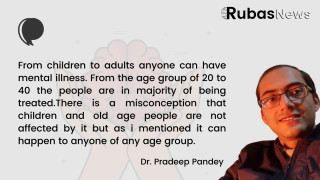
When you have a common cold, you sneeze, cough, and feel weak. These things are not controlled by you. They happen as a byproduct of your illness like mental illness is not someone's weakness or can be controlled by their will. They can affect anyone either an introvert or an extrovert. It doesn't matter if you are a physically healthy young teenager, it can still happen to you.
Misconceptions regarding mental health not only impact one's life but also the family members he or she lives with, his or her friends, and the work environment. It is quite significant to have predominant knowledge about mental illness. One of the most common mental illnesses is OCD however people are unaware of it and consider it to be an individual's nature or habit.
Obsessive-compulsive disorder is a mental illness in which one has recurring, unwanted thoughts, ideas, or sensations that makes one driven towards doing something in a repeated manner. It includes repetitive behavior of washing hands, checking on things, or cleaning. Significantly it interferes with one's daily life activities as well as social interactions.
People with OCD have thoughts that are persistent and rigid behaviors. Many people with OCD suspect their obsessions are not realistic however they have difficulty disengaging from the obsessive thoughts or stopping the compulsive actions. OCD affects 2-3 % of people in the United States and among adults women are more inclined to be affected than men. It often begins in childhood, adolescence, or early adulthood. Symptoms on average seem to appear by the age of 19 years old.
Symptoms of Obsessive-Compulsive Disorder
Here are some typical obsessions and compulsions that will help you to have a better understanding of OCD.
TYPICAL OBSESSIONS
- Fear of losing or discarding something important
- Recurrent intrusive thoughts of sound, number, words, or images
- Extreme concern with order, symmetry, or precision
- Fear of blurting out obscenities or insults
- Disturbing sexual thoughts or images
- Fear of getting contaminated by people or the environment
TYPICAL COMPULSIONS
- Repeated counting to a certain number
- Constantly seeking approval or reassurance
- Repeatedly checking locks, switches, or appliances
- Ordering or arranging things in a particular way
- Repeated cleaning of household objects
- Excessive or ritualized hand washing, showering, brushing teeth, or toileting
Risk factors of OCD
Certain factors can lead towards the risk of OCD, it can be a physical difference in certain parts of the brain or mental illnesses as well hereditary factors can also play a role.
- A parent, sibling, or child with OCD
- Physical difference in certain parts of your brain
- Depression, anxiety, or tics
- Experience with trauma
- A history of physical or sexual abuse as a child
There are several ways of treating OCD besides medications, psychotherapy, relaxations, and modulations that work at their best.
OCD Treatment
There is no cure for OCD. But one can be able to manage symptoms through the following ways:
- Psychotherapy
Cognitive-behavioral therapy can help change your thinking patterns. In a form called exposure and response prevention, your doctor will put you in a situation designed to create anxiety or set off compulsions, you will learn to lessen and then stop your OCD actions or thoughts.
- Medications
People control obsession and compulsion through the psychiatric drug called selective serotonin reuptake inhibitor.
- Relaxation
Meditation, yoga, and massages can be a great helping tools to cope with OCD symptoms as stress makes it worse.
- Neuromodulation
When the medications and therapies are no longer effective, then doctors talk to their patients about certain devices that change the electrical activity in a specific area of the brain.
Living with OCD can be irritating, exhausting, and disturbing as well. Nothing is impossible, one can still manage to live with OCD minimizing its symptoms. By the implementation of these techniques, one can live with OCD and manage both personal and professional life.
Living with OCD
- Regularly eating healthy food. One should go for nuts, seeds, proteins like eggs, beans, meat, complex carbs like fruits, veggies, and whole grains.
- Avoid alcohol, nicotine and caffeine, coffee, soda, and energy drinks.
- Sleep is significant for good mental health. Swap the time you spend looking at screens for 10 minutes of relaxing music or a warm bath.
- Regular exercise keeps your cortisol levels in check and benefits everything from your bones and organs to the numbers on your scale.
- Cheer the big and small progress you make along the way.
- Learn to relax through yoga, meditations, and soothing music.
- Try to be placid through night meditations and other techniques.
Implementing these tips mentioned above one can manage to live a normal professional and personal life. After proper treatment and psychotherapy the extreme concern about the symmetry changes to a normal concern. Mental illnesses are not the symbol of weakness. The misconception and illusion of considering mental illness should be removed by increasing awareness. We should talk openly about these issues with no guilt in the eyes and shame in the heart.