.gif)
Raute dropping out of sight
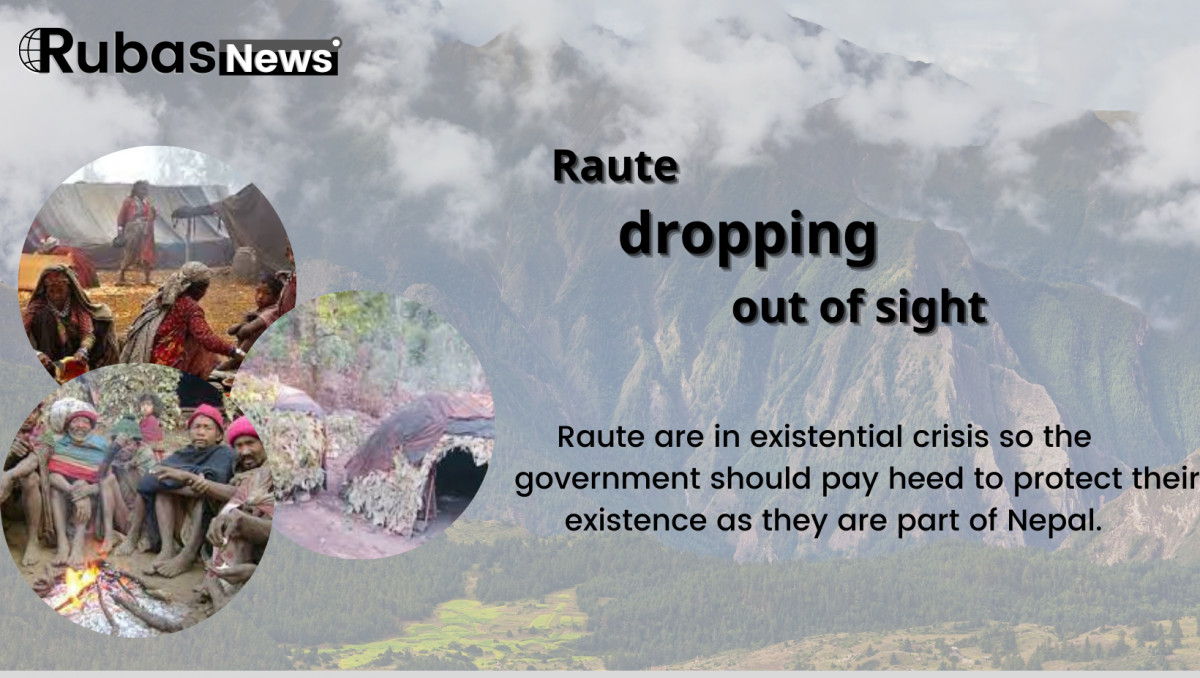
Getting to the bottom of diversity in the population of Nepal, Raute came into sight as the last nomadic rover ethnic group. Strong attachment with the forest, offers them as a survival accommodation dwelling into basic tents which are made of branches,leaves and clothes.For the sustenance of life they hunt animals including langur and macaque monkeys by the use of a special net.When the hunting becomes successful then the elder ones return to camp with a monkey.
Division of work is done on the basis of gender. The male members go hunting whereas the female members are for cooking, cleaning and household chores. They do not sell forest products or any other medical herbs from the forest, however they obtain grains, clothes, boxes and other goods from local farmers.
According to Nepal's 2011 census, the population of Raute community was 650 in the western region. The government tried to forcibly settle them; still 150 choosed to wander in the forest. In the context of Bhimdatta municipality ward no. 9 altogether three families of raute reside, out of three two reside in Mataina and the rest live in Khalla mashetty. Deepak Prakash Bhatta,who is a member of house of representative, has given accommodation to two families of raute, however the home is still on its way to completion. They currently reside near to the people of the community and sustain their life as a labour.The government had permitted them to cut small trees.They spend only 4-5 months at a specific place in the forest.
The language they speak is’ Raute’ and sometimes’ Khamci’ which means our talk.At the present time, there are about 150 numbers of raute who are found to be living in the middle hills of Achham forest in their temporary tents.
Number of raute is declining to an extent. Plethora of factors are responsible but in present state health factors seem to have scaled the race. Poor hygiene and lower living standard has led them to lead a life where even a minor incident or disease can take their lives. As they go hunting with the maximum chances of being killed by the wild animals they pass away.
They die out of the diseases which are caused due to the deficiency of nutritional factors like malnutrition, kwashiorkor, anemia, typhoid, diarrhoea, tuberculosis and many more. These diseases can easily be treated through medicines, however they refuse to visit hospitals.
The lack of childbirth and rearing education often leads to danger to both mother and child.Infants are at high risk due to the lack of proper sanitation and care. Similarly women are at high risk of diseases caused due to poor reproductive hygiene including yeast infection,cervical cancer, Vulvovagainal Candidiasis, urinary tract and reproductive tract infection.
They do not maintain basic sanitation and hygiene which results in the outbreak of diseases in their community as a byproduct the numbers of raute are declining. They are unaware about rudimentary needs. Lack of education leads them in the face of death.
Government ought to distribute health services and facilities to them in an accessible manner.Basic health education should be given to them. They should be convinced to live their lives with proper hygiene and sanitation. They should be given proper guidance regarding the intake of nutritious food and clean drinking water. We should assure their survival before extinction. We should promote their arts, cultures, practices and practices. We should support them by giving access to natural resources. Raute are in existential crisis so the government should pay heed to protect their existence as they are part of Nepal.